Reception and inspection
Release lots and control the fruit feed.
View details ↗Processing lines
Connect reception, washing, preparation, seed separation and pulp finishing around the berries you actually buy.
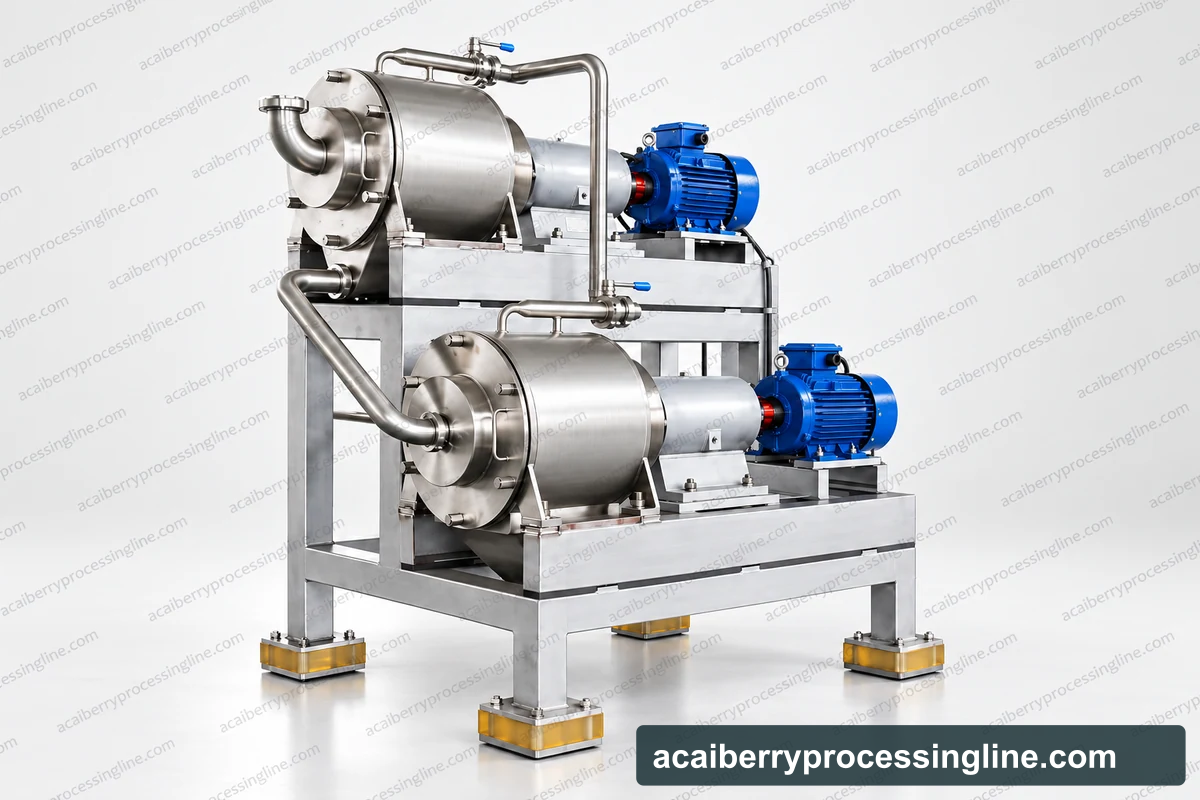
A whole-berry line begins with the delivery and ends at a defined pulp or packed-product handover. Its front end is different from a purchased-pulp finishing project. Build the route around fruit condition, the intended pulp specification and the next preservation step. The configured equipment should make each product, seed, reject and water stream visible.
Connected process
Release lots and control the fruit feed.
View details ↗Define physical cleaning and the water circuit.
View details ↗Meet the pulper inlet and safety-control plan.
View details ↗Assess pulp and seeds together.
View details ↗Set the required finish before the next route.
View details ↗State fruit supply, containers, delivery window, receiving condition and previous preparation. Record seasonal or supplier variation that the equipment must accommodate. Use whole-fruit input as its own capacity basis, separate from accepted pulp and final formulated product.
The receiving layout should allow inspection, lot identification and controlled feeding. Add a fruit elevator or sorting configuration only where a defined transfer or inspection duty requires it. Confirm working levels and operator access across the whole front end.
Washing, sorting and preparation each need a stated purpose. The water circuit must identify fresh supply, recirculation where included, rinse and drains. Record water entering the product independently from water used only for external washing.
Açaí processing needs an appropriate food-safety plan. Embrapa describes good practices and fruit thermal-treatment steps, while the actual industrial procedure must be established for the product and equipment. Do not use the word conditioning to imply an unverified safety treatment.
Prepared berries enter the pulper and leave as distinct pulp and seed / reject streams. Assess seed damage, residual pulp, accepted texture and measured water addition together. A generic processing capacity is not an açaí yield or accepted-pulp guarantee.
Refining follows only when the required finish needs another screening duty. Compare the effect on accepted product and retained material before choosing a second stage. Keep the job of each stage visible even when one machine combines extraction and finishing.
| Stage | Output to define |
|---|---|
| Reception / washing | Released, washed and selected whole fruit |
| Preparation | Feed meeting the agreed pulper conditions |
| Pulping | Accepted pulp plus separate seed / coarse-reject streams |
| Refining | Specified finish and retained material where required |
| Downstream | Frozen, aseptic or ingredient handover selected separately |
Define texture, measured solids, declared ingredients and pack format before selecting the downstream route. Frozen pulp needs coordinated filling, freezing and cold storage. Aseptic pulp needs a validated treatment, sterile-transfer and package system. Beverage bases require a formulation and customer receiving specification.
These are alternative project routes and can require different interfaces. A buffer connects production rates but does not make an uncontrolled delay acceptable. Set the usable tank range, permitted product holding condition and response to downstream pauses.
List included equipment, retained plant, product and utility connection points, control handovers and cleaning boundaries. Include seed and reject collection, preparation access and the space needed to remove screens and service drives. The daily schedule must include receiving, interruptions and cleaning.
The project proposal should establish selected models, product conditions and acceptance evidence. This page does not assert an installed açaí line, a guaranteed yield or a stock plant price. Send a representative product brief and the intended production window to define the equipment scope.
The pulper / seed-separation duty is central, but its feed condition and downstream pulp requirement determine how the whole line must be configured.
That requires a distinct preparation plan for the incoming frozen state. Frozen berries still contain seeds; frozen prepared pulp follows a different inlet.
They are alternative preservation routes selected for the intended product and market. Each needs its own system boundary and validation responsibilities.
Share your incoming material, production target and package format. The right configuration starts with a clear product brief.
Request a Quote ↗Equipment selection
Share your raw material, pulp target and packaging requirements.