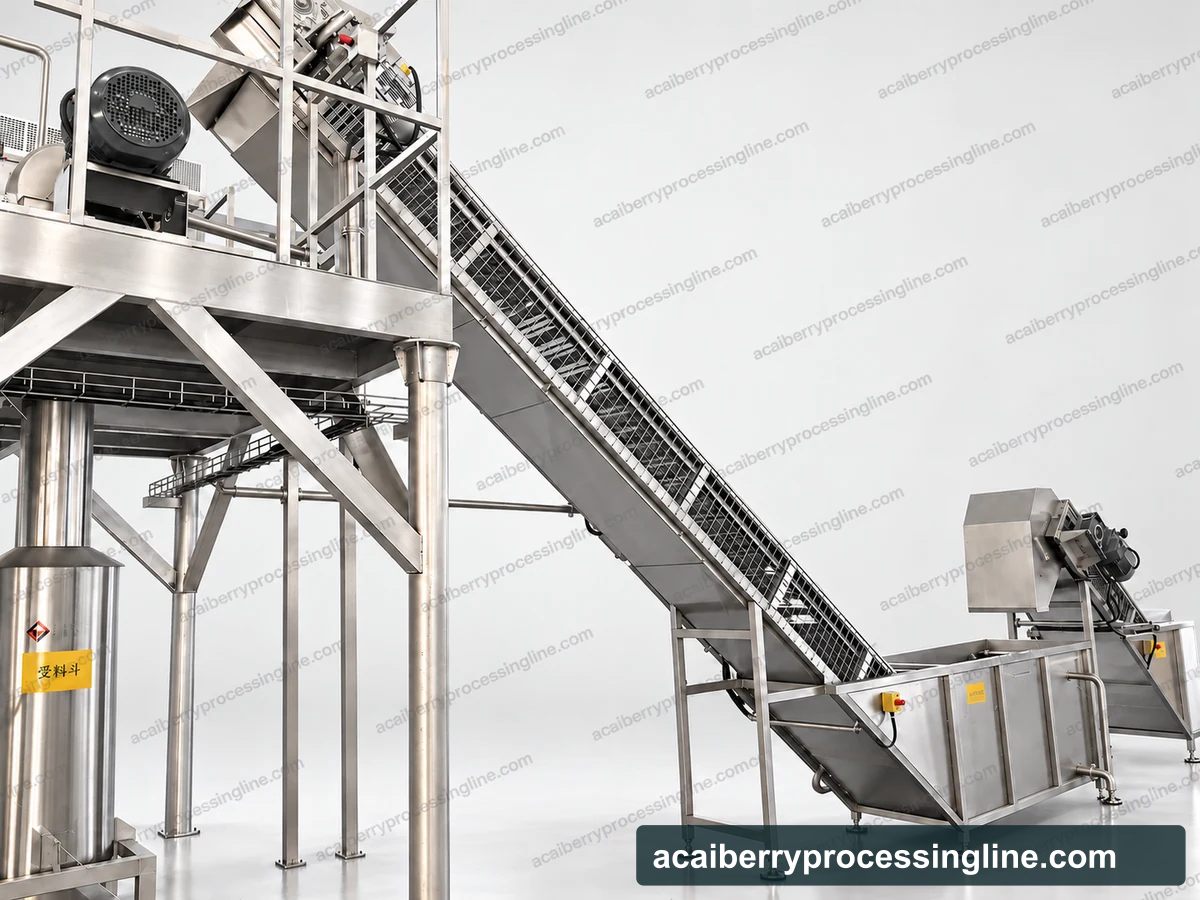
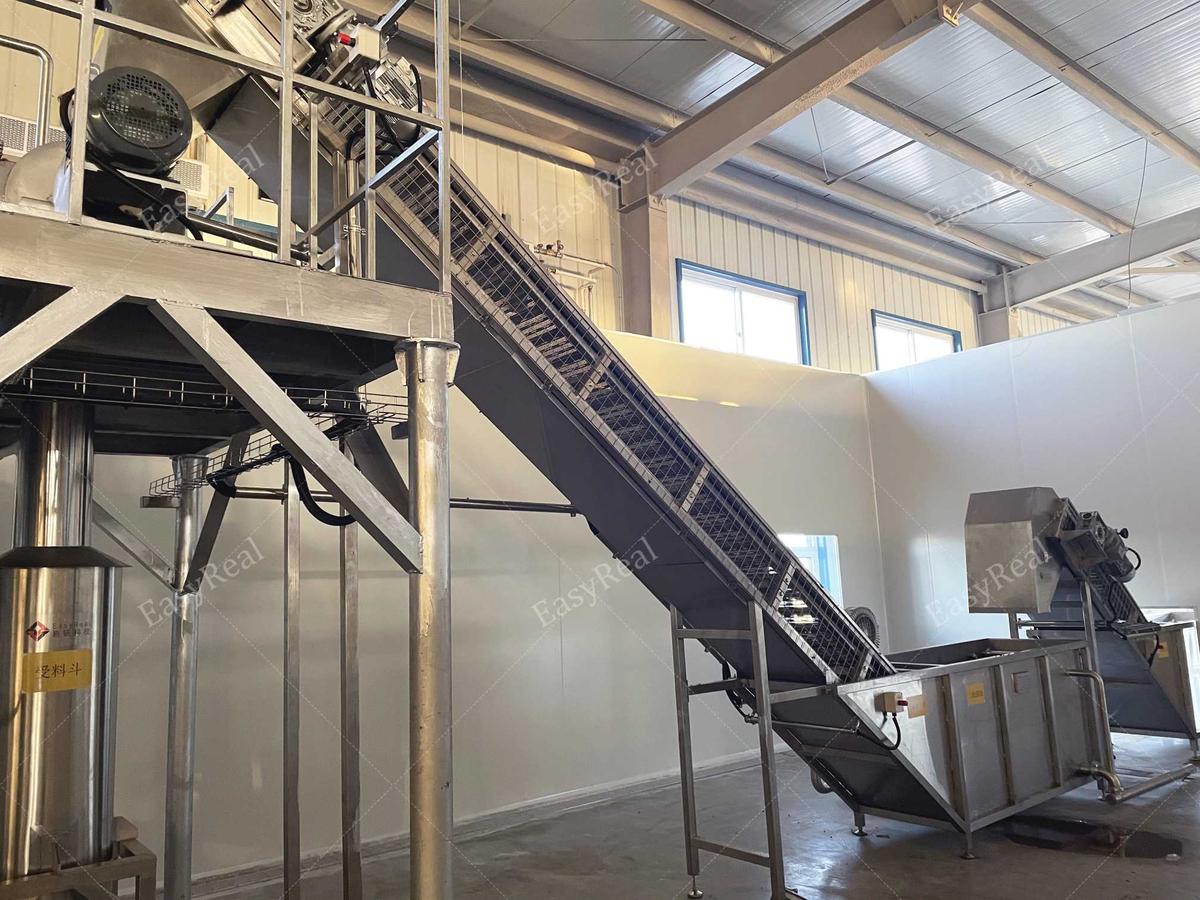
Define what reaches the washer
Describe the harvest container, delivery condition, loose leaves, stems, sand and other material arriving with each lot. Fruit that has already been sorted and rinsed presents a different duty from unsorted reception. Include the peak unloading pattern so a short surge does not bury the inspection area.
The upstream receiving arrangement should meter fruit into an observable layer. Agree how damaged fruit, foreign material and accumulated debris leave the process. These streams need collection and access without crossing the accepted-fruit discharge.
Match contact and discharge to the berry
Compare a wet-bath and elevator arrangement with the contact produced by a roller or brush configuration. These are equipment options to evaluate, rather than interchangeable descriptions of a washer. Trial representative fruit for visible damage, retained debris, carryover water and the condition needed for the next operation.
Confirm the receiving and discharge heights, transfer gaps and drainage after washing. An integral elevator may already provide the lift required by the layout. Add separate handling equipment only where a defined transfer duty remains.
Make the water circuit visible
Identify fresh-water supply, any recirculation circuit, debris removal, rinse points and final drainage. Put water entering the product on a separate measurement basis from water used only for washing. Specify sampling and monitoring responsibilities with the hygiene team.
The equipment enquiry should state which water-management components are included. A pump and wash bath alone do not establish water quality or a sanitizer programme. The responsible food-safety team must establish permitted chemicals, control limits and corrective action for the actual operation.
| Selection item | Information to compare |
|---|---|
| Fruit contact | Bath, spray, roller or brush action; evidence with representative berries |
| Water scope | Supply, recirculation, debris removal, rinse and drain connections |
| Transfer | Inlet / outlet heights, fruit layer and downstream feed requirement |
| Hygiene access | Surfaces requiring removal, drain points and cleaning inspection |
Keep sorting and food safety explicit
Provide an inspection position where operators can see the fruit and remove unwanted material before pulping. Check reach, lighting, safe stopping and reject-bin access with the proposed line arrangement. A conveyor does not replace the receiving acceptance procedure.
Washing removes material under the conditions of its design. It is not a universal microbial kill step. Açaí processing requires a hazard assessment and an appropriate validated control plan; fruit preparation and downstream pulp treatment need their own defined duties.
What a configured proposal should settle
Ask for a layout showing the wash-water connections and material outlets, a cleaning-access review, the fruit input basis and the interfaces to preparation. The operating requirement should include stopping, draining and cleaning after a dirty lot, not only continuous fruit movement.
Model-specific capacity, dimensions, power and water demand are not verified on this page. Supply the intended fruit and production window so those values can be established in the selected equipment documentation and acceptance schedule.
Review a full wash and clean cycle
During the equipment review, follow a lot from the receiving transfer through washing, inspection and discharge, then follow the same machine through draining and cleaning. Check whether debris collection, open panels and removed parts can be reached in the proposed layout. Record any access that depends on moving adjacent equipment. This practical walkthrough can expose an incomplete supply boundary before the line arrangement is fixed.
Configuration & selection basis
| Inlet | Accepted whole berries |
|---|---|
| Outlet | Washed, selected berries; removed debris and wash water |
| Selection basis | Fruit condition, debris, handling and water plan |
| Performance evidence | Representative-fruit inspection and configured acceptance |
| Ratings | Confirm for the proposed model and project |
The proposal defines model-specific ratings after product review and trials. Catalog performance with other fruits is not a validated açaí capacity.
Questions from equipment buyers
Can the washer sanitize the pulp?
The washer treats whole fruit before extraction. It does not establish the safety or preservation of the later pulp. Keep washing, any validated fruit treatment and pulp treatment as separate duties.
Is a brush washer always preferable?
No. Contact action, fruit condition, debris and the required discharge determine the configuration. Evaluate damage and cleaning access with the intended fruit rather than choosing from the equipment name.
Does a purchased-pulp line need this machine?
A pulp-only intake normally starts with hygienic pack handling and pulp preparation. It does not require a whole-fruit washer unless a separate whole-berry route is also included.
Technical references
Let’s define your equipment.
Share your incoming material, production target and package format. The right configuration starts with a clear product brief.
Request a Quote ↗