Choose the inlet
Whole fruit or purchased pulp requires a different front end.
View details ↗Processing lines
Balance pulp preparation, hygienic filling, freezing and cold storage as a connected production route.
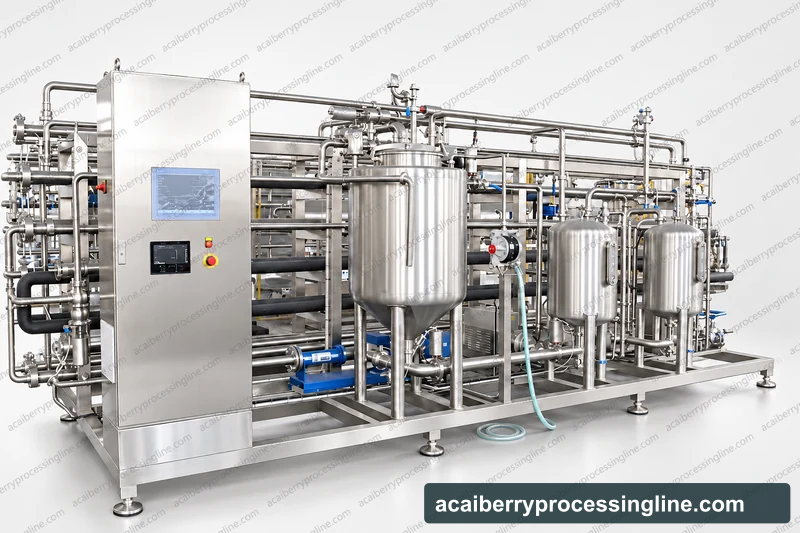
A frozen-pulp project is defined by the finished product, package and cold-chain handover. It may begin with whole berries or with purchased pulp. Select the inlet and the required finish first, then coordinate treatment, packing and the receiving freezer. Freezing is a preservation route; it does not establish that earlier handling or the product safety controls are adequate.
Connected process
Whole fruit or purchased pulp requires a different front end.
View details ↗Add screening and mixing only for a stated requirement.
View details ↗Define the product-specific safety and preservation process.
View details ↗Use the actual product and package.
View details ↗Confirm load, timing and cold-storage scope.
View details ↗Identify plain pulp or a declared formulation, the required texture, analytical solids basis and intended buyer. State package dimensions and fill mass. A food-service ingredient, a retail pulp pack and a formulated base may impose different filling and handling requirements.
Record the intended storage and distribution arrangement and the evidence required by the product owner. No universal shelf life follows from a freezer or filling-machine choice. Product-specific safety and quality evaluation remains part of the finished-product programme.
Whole berries need reception, washing, defined preparation and seed separation before pulp finishing. Purchased pulp starts with supplier release, pack handling and controlled preparation. The same frozen output does not make those two input equipment lists equivalent.
For purchased frozen blocks, describe the incoming pack and the preparation method required to reach a pumpable or otherwise suitable feed. Keep that operation controlled and hygienic. Opening a supplier package also needs a clear downstream process and traceability.
The actual product and hazard assessment determine the necessary process controls and any thermal treatment. Washing, freezing and filling are not interchangeable safety operations. Identify monitoring, release and out-of-condition product handling for the selected route.
Define the product condition delivered to the filler and the permitted transfer / waiting conditions. The buffer and transfer system should support that plan with level controls, traceable lots and a response to a packaging stop.
| Boundary | What to state |
|---|---|
| Pulp to filling | Specification, treatment history and receiving temperature |
| Filling to freezing | Pack mass, geometry, arrival rate and permitted wait |
| Freezing to storage | Product release method and storage handover |
| Daily schedule | Batch timing, cleaning, pack changes and available freezer window |
| Supply scope | Processing, filling, freezer, cold store and installation owners |
Ask the freezer supplier for its receiving conditions and available operating window. Compare the actual product temperature, pack arrangement, package mass and timing with those limits. A filler rate does not describe the heat load or the completed freezing cycle.
Show movement and waiting space for filled packs, frozen packs and pallets. Include the capacity of cold storage and distribution handling. If the freezer already exists, its constraints should be part of the line enquiry rather than discovered after selecting the filler.
The configured proposal should identify new equipment, retained plant, service conditions and the acceptance method for each handover. Define who establishes the product process and who verifies package closure, freezing and cold-storage interfaces.
No açaí-specific capacity, time-temperature process or freezing performance is claimed here. Build the quotation around the product, package and schedule. This makes comparisons useful and exposes whether cold-chain equipment or services remain outside the offered scope.
No. A frozen product can start with whole-fruit extraction or purchased pulp. Choose equipment from the actual inlet rather than the final storage format.
Do not assume that. The actual hazard assessment and validated process determine the controls required for the product and operating conditions.
Its supplier or responsible designer must confirm the receiving load, packaging and operating schedule. Include those conditions when configuring upstream equipment.
Share your incoming material, production target and package format. The right configuration starts with a clear product brief.
Request a Quote ↗Equipment selection
Share your raw material, pulp target and packaging requirements.