Define the batch before the mixer
Identify incoming pulp, permitted ingredients and the target batch mass. Record whether the product declaration allows water addition and how the incoming pulp specification varies. The equipment discussion can use ingredient categories and physical properties without requiring disclosure of the complete commercial recipe.
Keep total solids, soluble-solids readings and ingredient addition records distinct. A single refractometer result may not describe dry matter in a pulp containing suspended material. Agree the analytical method and sampling plan that the buyer will use to release the blend.
Map the ingredient addition sequence
Describe liquid, powder, syrup and pulp additions, their containers and the order in which they enter. Include any preparation performed outside the main tank. A powder-induction or high-shear duty should be separately justified by the ingredient rather than presumed part of a general agitator.
Provide a hygienic, observable addition position with a way to reconcile the material charged. Review access, lifting and operator reach with the actual containers. Account for residual ingredient in hoses and containers if the recipe tolerance depends on it.
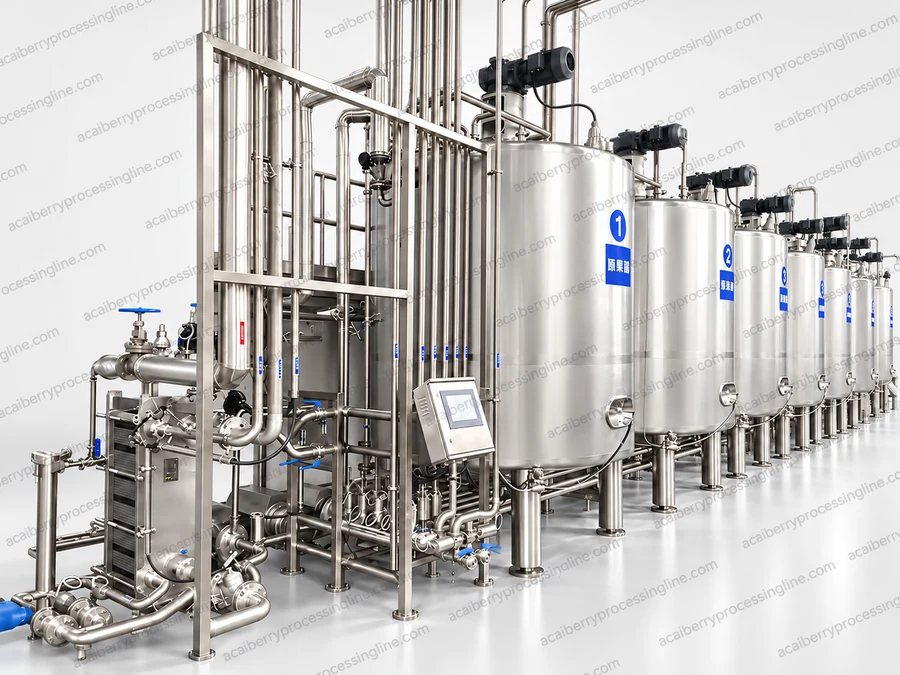
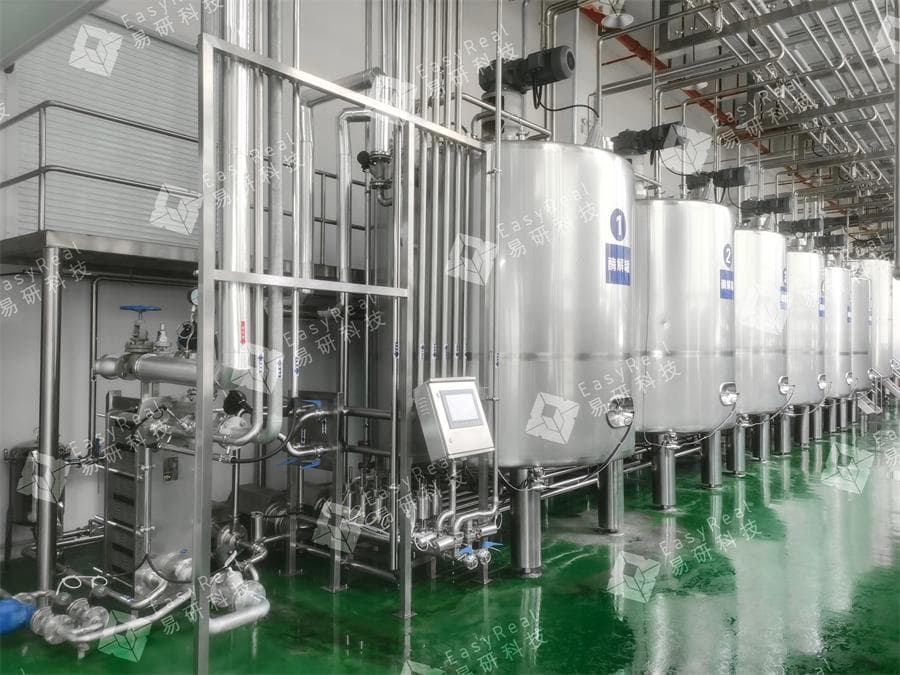
Select agitation for the working range
State consistency at the intended process temperature, minimum and maximum batch size, suspended material and the required result. A mixer must work within the proposed liquid level range. A full-vessel trial does not automatically establish the minimum batch performance.
Define uniformity through representative sampling locations or another agreed method. Record batch conditions and mixing sequence when assessing samples. Avoid selecting speed or motor power from the product name alone; these values belong to the configured mixer and the physical duty.
| Decision | Information to supply |
|---|---|
| Recipe basis | Target batch mass and declared additions |
| Working range | Minimum / maximum batch and process temperature |
| Mixing result | Uniformity or dispersion method and sampling points |
| Cycle | Charge, mix, check, release, discharge and clean |
| Next operation | Transfer flow, receiving temperature and pack or treatment route |
Balance complete cycles
Include charging, mixing, sampling, release, discharge and cleaning in the batch schedule. Sampling or ingredient preparation can occupy more time than the visible mixing step. A mixing-only cycle time is not the production rate of the whole blending operation.
Where a continuous downstream process needs steady feed, compare the release schedule with available buffer inventory. Decide whether one vessel can cover the cycle or whether a separate buffer or another batch arrangement is needed. Show that decision in the line balance.
Keep recipe changes connected to hygiene
A new ingredient can change the soil, cleaning requirement, allergen profile and downstream treatment basis. Record the product family and changeover expectations before selecting shared pipework and cleaning circuits. Confirm that seals and other contact materials suit both product and cleaning conditions.
Model-specific vessel sizes, agitation speeds, power and batch times are not verified here. Request a configured proposal with the working range and acceptance method. The preservation plan must be reviewed for the final blend rather than carried over automatically from the incoming pulp.
Make the released batch reproducible
Retain the charging record, ingredient identification, measurement checks and sampling result with each batch. Agree how operators confirm that the intended mass reached the tank, including additions through hoses or prepared containers. If a batch needs correction, document the revised basis before release. These operating records make the mixing acceptance useful in production and help distinguish equipment limitations from variation in incoming pulp or ingredient preparation.
Configuration & selection basis
| Inlet | Açaí pulp and declared recipe ingredients |
|---|---|
| Outlet | A specified pulp blend or beverage base |
| Selection basis | Batch range, rheology, addition method and uniformity |
| Cycle basis | Complete charge-to-clean sequence |
| Acceptance | Agreed product samples and batch records |
The proposal defines model-specific ratings after product review and trials. Catalog performance with other fruits is not a validated açaí capacity.
Questions from equipment buyers
Can the same tank make plain pulp and a thick bowl base?
Possibly, but the working range, viscosity, ingredient addition and cleaning duty must be assessed for both products. One nominal vessel volume does not establish both duties.
Does blending change the preservation requirement?
It can. The final recipe and its handling become the basis for the hazard assessment and treatment design. Incoming pulp documentation does not automatically validate the blend.
How is mixing time established?
Use the actual product or an agreed representative material, defined batch conditions and a measurable uniformity method. Include the full batch cycle when calculating output.
Technical references
Let’s define your equipment.
Share your incoming material, production target and package format. The right configuration starts with a clear product brief.
Request a Quote ↗