State the product and the treatment objective
Identify plain pulp or formulated base, analytical product information, suspended material and the intended storage and distribution route. Define whether the project delivers product for hygienic frozen packing or a connected aseptic process. These require different validation boundaries.
The responsible food-safety and process specialists establish the relevant microbial objective and validated operating conditions. Fruit washing, any whole-fruit hydrothermal treatment and pulp thermal processing are separate operations. Their duties should be visible rather than collapsed into one heater symbol.
Characterize the feed at the equipment inlet
Supply product consistency with temperature and method, particle information, expected flow range and observations of deposits or fouling. Include all recipe variants that must use the system. An exchanger suitable for a free-flowing liquid may require a different arrangement for viscous pulp.
Confirm inlet temperature, upstream buffer behaviour and the consequences of interruptions. The selection must cover the real operating envelope, including start-up and changes in demand. A peak pump flow is not the validated product-flow basis.
Compare the complete thermal circuit
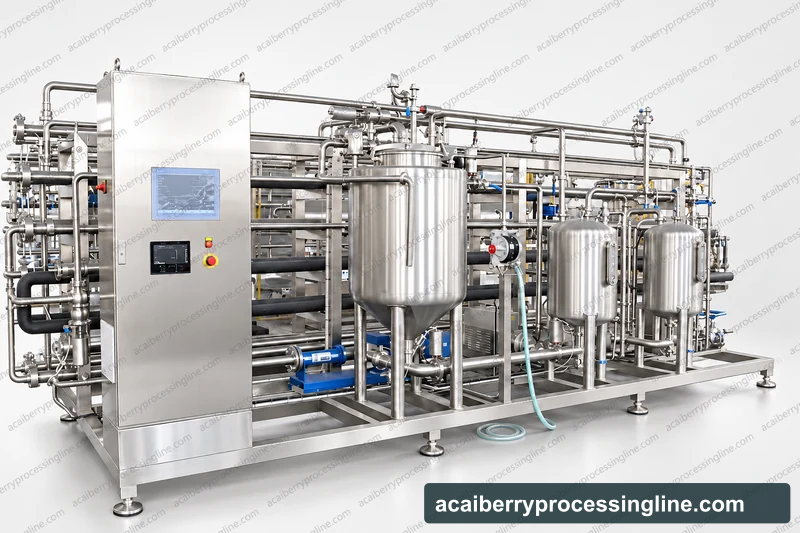
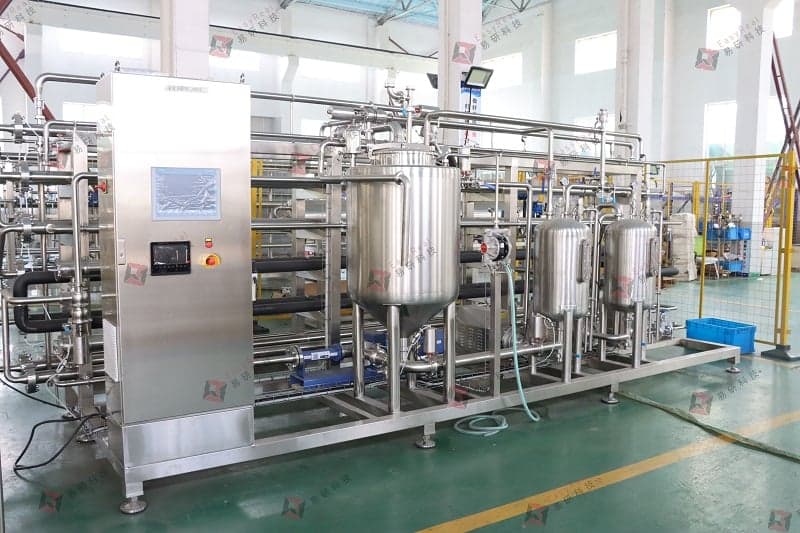
Request a process diagram identifying feed, heating, holding, cooling, monitoring and the destination of out-of-condition product. Ask how measured flow and the holding arrangement support the required process. The selected design must explain the response when a required condition is not achieved.
Utility requirements follow the configured heat balance and cleaning states. Confirm service quality, peak demand, return conditions and the interface to existing plant services. Heat recovery and automation features, where included, need a stated design basis rather than a general efficiency claim.
| Boundary | What to establish |
|---|---|
| Product process | Responsible specialist, product definition and validated conditions |
| Equipment | Exchanger arrangement, flow control, holding and monitoring |
| Exception handling | Diversion / return destination and restart procedure |
| Downstream | Cooling, sterile or hygienic transfer and filler readiness |
| Cleaning | Circuit coverage, cleaning / sterilization duties and records |
Connect treatment to the actual filling route
For frozen pulp, identify the receiving product temperature, time to packing and freezing interface. For aseptic pulp, connect the treatment, sterile pathway, any aseptic holding and filler package boundary. A non-sterile tank between two nominally aseptic machines changes the process.
Assign control signals and responsibility at each connection. A downstream stop may require upstream diversion, controlled recirculation or another engineered response. Establish the permitted operating sequence and product disposition before accepting a full-line description.
Separate equipment checks from process validation
Equipment acceptance can verify instruments, alarm actions, recorded data, flow measurement, circuit construction and the agreed operating sequence. Product-process validation asks whether the complete system achieves the required result for the actual product. Name the responsible party and evidence for both.
No universal time, temperature, shelf life or açaí-specific capacity is provided here. EasyReal manufacturer material supports the existence of tubular equipment configurations; the proposed model and process documentation must establish suitability for your pulp. Include this evidence requirement in the enquiry.
Review the control cause and effect
Ask for a cause-and-effect review linking each required measurement to its action and recorded state. Include instrument failure, loss of the configured flow condition, downstream unavailability and loss of a required service. The review should identify who tests each action and who approves the integrated sequence. It does not set the product process; it checks that the offered equipment and controls support the process established by the responsible specialists.
Configuration & selection basis
| Inlet | Specified pulp or formulated base |
|---|---|
| Outlet | Treated product for the defined filling or cooling system |
| Process design | Product-specific validated conditions and responsibility |
| Equipment evidence | Configured process diagram, instruments and acceptance protocol |
| Ratings | Confirm for actual product; no generic açaí rating implied |
The proposal defines model-specific ratings after product review and trials. Catalog performance with other fruits is not a validated açaí capacity.
Questions from equipment buyers
What temperature should açaí pulp be pasteurized at?
A web equipment page cannot establish a universal setting. Use the actual product, hazard assessment and validated process established by the responsible specialists and applicable requirements.
Does a tubular machine guarantee shelf-stable pulp?
No. Product treatment, sterile handling, filling, packaging and operating controls must form a validated system. Shelf life also requires product-specific evidence.
Can thermal treatment feed both frozen and aseptic packing?
Only where the configured process, connections and validated operating procedures support each route. Identify the route change, isolation and cleaning requirements explicitly.
Technical references
Let’s define your equipment.
Share your incoming material, production target and package format. The right configuration starts with a clear product brief.
Request a Quote ↗