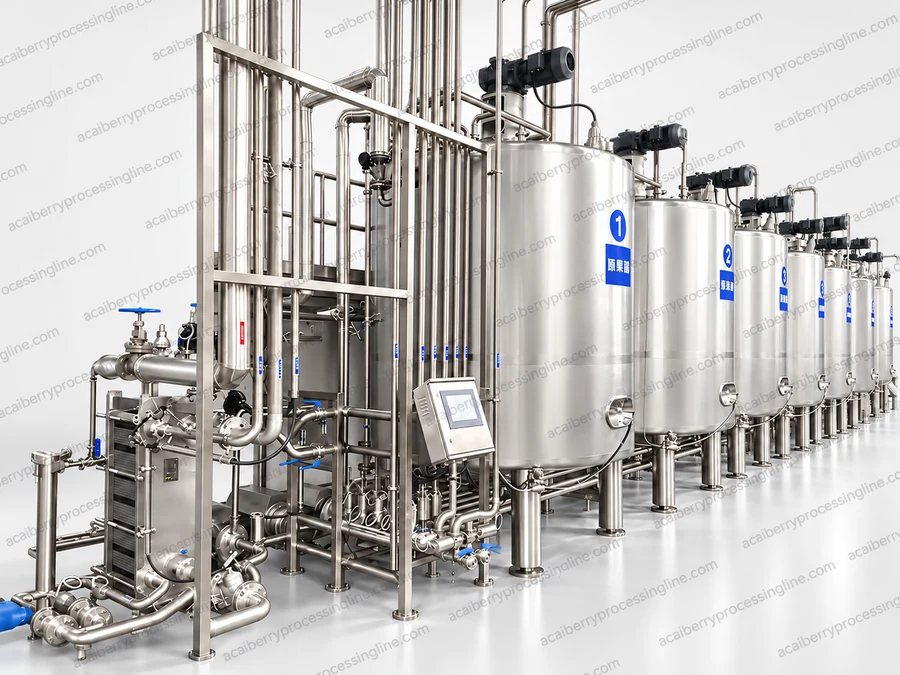
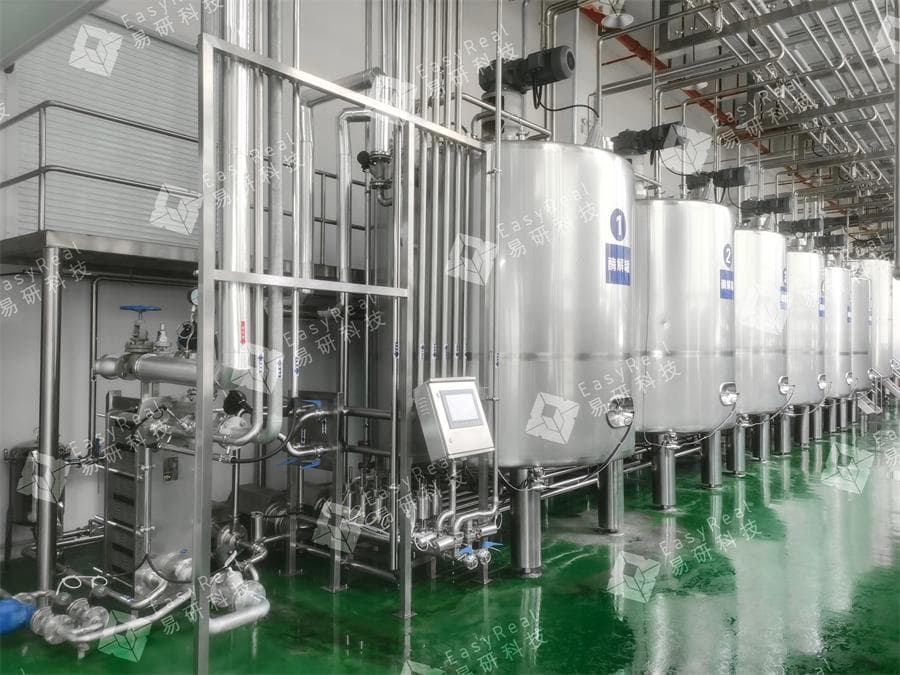
Give the buffer a stated operating purpose
Record the upstream and downstream flow patterns over a batch or production period. Include receiving surges, planned stops and cleaning states. The accumulation during a downstream pause may be very different from the average daily throughput.
State what happens at high and low levels: upstream stop request, pump protection, treatment slowdown or controlled shutdown. Decide which product may remain in the tank and how its time and temperature history will be tracked. A vessel cannot make an uncontrolled process delay acceptable.
Separate nominal volume from usable volume
The usable operating range sits between the low level needed for the outlet and the high level permitted for mixing, surge allowance and free space. Ask for that range in the proposal rather than comparing tank nameplate volumes alone.
For a preliminary balance, cumulative inflow minus cumulative outflow describes inventory change over time. Confirm the result against the agreed maximum holding condition and cleaning sequence. Vessel geometry, outlet arrangement and agitation constraints determine whether the assumed working range is physically usable.
| Input | Why it matters |
|---|---|
| Inflow / outflow schedule | Sets required accumulation and minimum inventory |
| Pulp condition | Supports outlet, pump and agitation selection |
| Usable levels | Distinguishes working hold-up from total vessel volume |
| Maximum process delay | Constrains buffering and product disposition |
| Cleaning state | Identifies return routing, drainage and access |
Select the contact arrangement for the actual pulp
Provide viscosity or consistency information with temperature, suspended material and any formulation changes. Agree whether gentle movement, recipe mixing or simply controlled transfer is required. These are different agitation duties and should not be assumed from the presence of a motor.
Review headspace, open additions and any entrainment of air. If oxygen exposure or colour is a product target, define the sampling method and acceptance condition. A closed vessel drawing does not establish a numeric oxygen or quality result.
Treat the outlet and pump as one interface
Check suction geometry, tank level, line length, elevation and downstream pressure requirements using the stated pulp condition. The pump needs a duty range rather than a nominal maximum flow. Review minimum level and the response to a blocked or stopped receiver.
Include drains, valves, seals, instruments and their cleaning method on the circuit drawing. Define removable components and safe access. Product retained in the outlet assembly still belongs to the hygiene and yield assessment even when the tank shell drains well.
Request an operating envelope
A useful proposal states the intended working-volume range, product conditions, agitation duty, transfer connections and level-control actions. It should also identify the cleaning method and any utilities needed by the chosen jacket or vessel arrangement.
No stock tank size, cooling duty, power or hygienic certification is asserted here. Confirm model-specific details in the selected equipment documents. Carry the buffer schedule into the line plan so upstream production, treatment and filling remain coordinated during normal stops.
Walk through a downstream stop
Use the proposed daily schedule to walk through a realistic downstream interruption. Identify the tank inventory at the start, the time at which the high-level action occurs and the resulting upstream response. Then show how product already in the vessel is identified and released or dispositioned. This exercise connects volume, controls and product responsibility without assuming that a larger vessel can absorb every operating exception.
Configuration & selection basis
| Inlet | Screened pulp |
|---|---|
| Outlet | Controlled feed to treatment, blending or filling |
| Sizing basis | Cumulative inflow / outflow and permitted process delay |
| Working range | Defined high and low operating levels |
| Product basis | Pulp consistency, temperature and suspended material |
| Control interface | High / low level and downstream readiness |
The proposal defines model-specific ratings after product review and trials. Catalog performance with other fruits is not a validated açaí capacity.
Questions from equipment buyers
How large should the buffer tank be?
Use the operating schedule, accumulation during pauses and usable level range. The permitted product holding condition constrains the result; daily output alone does not size the vessel.
Does a tank always need agitation?
The required duty depends on the pulp and operating period. Establish whether the aim is uniformity, recipe mixing or transfer support, then verify that duty with the selected configuration.
Can extra buffer replace production coordination?
A larger tank creates more inventory and potential holding time. Define stop logic and product disposition as well as volume.
Technical references
Let’s define your equipment.
Share your incoming material, production target and package format. The right configuration starts with a clear product brief.
Request a Quote ↗