Receive and release
Check lot, package, declaration and delivery condition.
View details ↗Processing lines
Configure bulk-pulp receiving, controlled opening, hygienic transfer and smaller-pack filling without adding whole-fruit extraction.
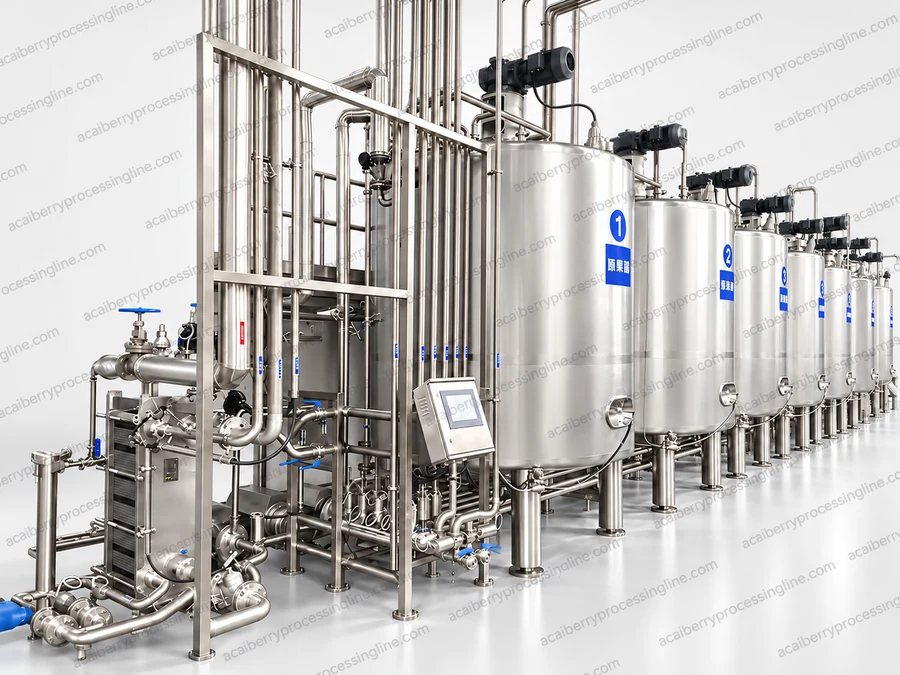
A repacking project changes the package around purchased pulp. The core route is release, controlled preparation or connection, hygienic handling, filling, closure and the defined preservation handover. It may include screening or blending where the product requires them, but it does not automatically need a fruit washer, seed separator or a new recipe.
Connected process
Check lot, package, declaration and delivery condition.
View details ↗Handle the supplied form under a defined procedure.
View details ↗Specify the actual pulp and cleanable circuit.
View details ↗Use the final package and complete operating cycle.
View details ↗Coordinate treatment, freezing / storage and product evidence.
View details ↗State the incoming product, pack format and treatment history, then describe the final package and any permitted ingredient changes. Repacking plain pulp and formulating a new base are different scopes. The product declaration and analytical specification should remain explicit throughout.
Use purchased-pulp input, completed packed output and rejected / retained product as separate quantities. The balance should account for material left in incoming packs, preparation equipment and transfer circuits. No whole-fruit extraction yield belongs in a repacking comparison.
Describe incoming pack size, unloading method, external packaging removal and the opening or connection procedure. Provide space for empty packaging and rejected material without crossing the exposed-product path. Traceability must link incoming lots to the final packs.
Frozen blocks require a controlled preparation method that produces the downstream inlet condition. Aseptic bags require a deliberate decision about sterile connection or conventional opening. Once the original package boundary is changed, the supplied storage statement cannot simply validate the new operation.
Screening belongs only where the incoming pulp needs a defined physical finish. Blending belongs where a declared recipe or standardization duty exists. A buffer should cover an identified timing difference while remaining within the permitted product holding condition.
Specify transfer from the source through the filler using the actual pulp consistency, temperature and line geometry. Include connections, seals, drains and cleaning coverage. A pump capacity alone does not establish a workable or hygienic repacking system.
| Decision | Confirm |
|---|---|
| Incoming format | Frozen blocks, chilled container or aseptic bag |
| Product changes | Plain repack or declared formulation / screening requirement |
| Hygiene boundary | Opening, exposed product, cleanable transfer and closure |
| Final pack | Dimensions, fill mass, closure and acceptance |
| Preservation | Product-specific treatment and freezing / storage responsibility |
The final product safety and storage programme must cover the actual opening, handling, treatment where required, filling and closure. Freezing can be part of that route, with the new pack geometry and receiving temperature included in the freezer load.
An aseptic final pack requires a complete validated treatment and sterile filling system. A conventional transfer from an opened aseptic bag is not automatically an aseptic repacking process. Assign the responsible specialist and evidence for the selected route.
Send incoming and final package information, supplier pulp specification, production window and intended output. Show available cold storage, preparation space, utilities and retained equipment. Include package movement and cleaning alongside the product route.
The configured proposal should state conditional modules, equipment duties, connection points and acceptance methods. No shelf life, pack rate or model compatibility is guaranteed here. A focused scope makes the actual handling and preservation responsibilities clear before equipment selection.
That is a possible project scope, but it needs controlled receiving / preparation, hygienic handling, compatible filling and a validated product preservation plan.
Whole-fruit pulping is normally unnecessary for purchased pulp. Add screening or blending only when a defined final-product requirement justifies them.
Opening changes the original package boundary. The new handling and preservation route must be assessed and documented for the final product and package.
Share your incoming material, production target and package format. The right configuration starts with a clear product brief.
Request a Quote ↗Equipment selection
Share your raw material, pulp target and packaging requirements.