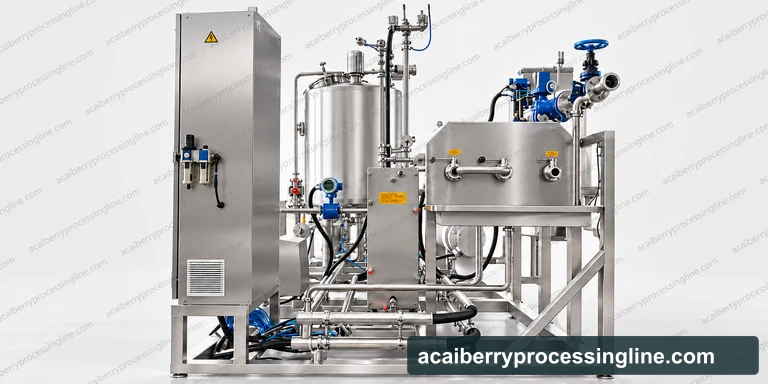
Define the circuits and the exclusions
Draw the product route and then identify each intended cleaning circuit: vessels, transfer lines, exchangers and the connected filling equipment. Mark isolation points, supply and return, drains and any components removed for manual cleaning. Include short branches and instrument connections.
Assign a cleaning method to every product-contact component. A mixed line can legitimately use both CIP and manual cleaning, provided the boundaries and verification are clear. Whole-fruit handling surfaces and extraction screens may need a different procedure from a closed pulp transfer loop.
Specify the soil and the product changes
State the product family, ingredients, operating duration and observed deposits. A formulated beverage base can present a different cleaning duty from plain pulp. Review recipe changes and any allergen requirements with the food-safety team before sharing circuits.
The responsible cleaning specialists establish chemical selection, concentrations, temperatures, contact conditions and verification methods with the equipment suppliers. This page does not prescribe a universal chemical recipe. Confirm compatibility with metal surfaces, seals, instruments and packaging-related components.
Select the CIP system from its circuits
Request the hydraulic basis for each circuit, its supply and return conditions and the required operating states. Tank count and skid appearance do not describe whether a particular circuit receives the necessary cleaning action. Return routing and drainability belong in the design.
Identify whether circuits run sequentially or at the same time. Production and cleaning may compete for water, heat, compressed air or electrical capacity. Put simultaneous demand and the cleaning window into the utility schedule before selecting supply equipment.
| Part of the line | What the project must establish |
|---|---|
| Closed pulp circuit | CIP path, flow basis, return and drainability |
| Pulper / refiner | Screen removal, outlets, seals and manual access |
| Vessels | Coverage, agitation state, outlets and inspection |
| Aseptic boundary | Cleaning and sterilization sequence with validation owner |
| Site services | Supply quality, peak demand and waste / return connections |
Plan verification and release
Choose inspection and verification methods appropriate to the soils and risks. Define accessible inspection points and the records needed before production resumes. A completed timer or a clean-looking external surface is not evidence that every product-contact location was adequately cleaned.
Agree actions when a circuit does not achieve its required conditions or a component fails inspection. Include correction, repeat cleaning where required and release responsibility. Operators need a clear line state so a partially cleaned section cannot be mistaken for production-ready equipment.
Ask for an inspectable cleaning proposal
A configured proposal should include circuit drawings, cleaning-method boundaries, service conditions, return / waste points and the items requiring disassembly. Ask for the maintenance space and safe access to remove screens, valves and seals.
Model-specific tank sizes, pump duties, cycle lengths and consumption are not verified here. EasyReal catalog material establishes that CIP equipment is an available equipment family. Suitability and performance must be confirmed for the actual installed circuits, product soils and agreed verification procedure.
Check the system after reassembly
Where parts are removed, include correct reassembly and readiness in the cleaning procedure. The record should identify the screen, seals, valves or other components returned to service and the checks required before product enters. Review the route followed by return solution and removed soil as well as the supply route. This helps reveal a circuit that appears connected to CIP but leaves a component or return path without an assigned method.
Configuration & selection basis
| Inlet | Defined cleaning services and a stopped production circuit |
|---|---|
| Outlet | Cleaned equipment with an agreed verification record |
| Operating state | Independent from product production |
| Selection basis | Defined circuits, soils, schedule and verification |
| Interfaces | Supply, return, drains, controls and manual cleaning |
| Scope evidence | Circuit drawings and component cleaning methods |
The proposal defines model-specific ratings after product review and trials. Catalog performance with other fruits is not a validated açaí capacity.
Questions from equipment buyers
Does a CIP connection mean the machine is fully CIP capable?
No. The supplier must identify covered circuits and exclusions. Screens, outlets, seals and branches need their own documented cleaning method.
Is CIP the same as sterilization?
No. Cleaning and sterilization have different objectives and acceptance requirements. An aseptic system needs defined and validated duties for both.
Can a CIP unit be sized from line capacity?
Production capacity alone is insufficient. Circuit geometry, required cleaning conditions, return, simultaneous demand and cleaning schedule determine the equipment duty.
Technical references
Let’s define your equipment.
Share your incoming material, production target and package format. The right configuration starts with a clear product brief.
Request a Quote ↗